

The perpetual present-tense
Heteropessimism, "gender war," and the perils of getting stuck in the present

I have a lot of thoughts on the hot-button topic of “hetero-optimism” and sexual optimism in general — so many, in fact, that I already wrote approximately 12,000 words of them into an essay for my book, which means unfortunately I cannot really write about most of them here.1 (BUT you’ll be able to read them next fall!!!!)
In the wake of that limitation, I wanted to sort of zoom in (but also zoom way out) on an adjacent subject… xx
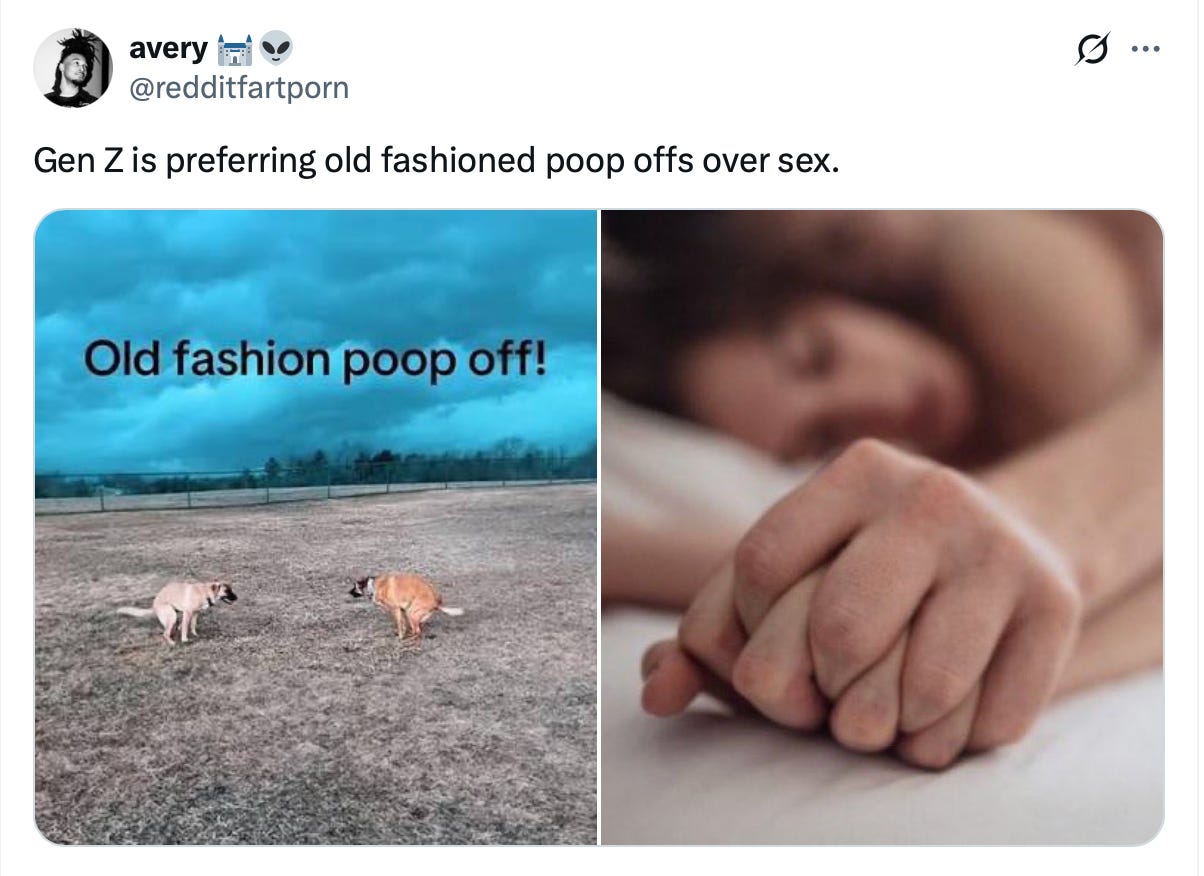
I’ve been seeing a lot of concern online about a new, troubling phenomenon: men and women just aren’t getting along anymore. We’re in the midst of a war, the headlines say, and not the kind that murders children overseas — it’s a gender war (the kind that prevents them, cruelly, from even being conceived at all). The artifacts of this war are numerous: they say Gen Z isn’t having sex (in fact, we’re scared of the stuff!!); they say young people now are “puriteens,” sex-negative scolds enforcing a doctrine of overzealous moral policing and safety-minded isolation; they say that young women now live in a culture of overwhelming pop-feminist “heteropessimism” (Asa Seresin’s term for a performative, often joking disaffiliation from heterosexuality) that teaches them to hate men and detach from sex and romance. If a young person is caught exhibiting any anxiety, hesitation, or emotional dysfunction in or about relationships, it’s often read as proof of generational — and thus cultural — decline. The kids, they say, are not alright.
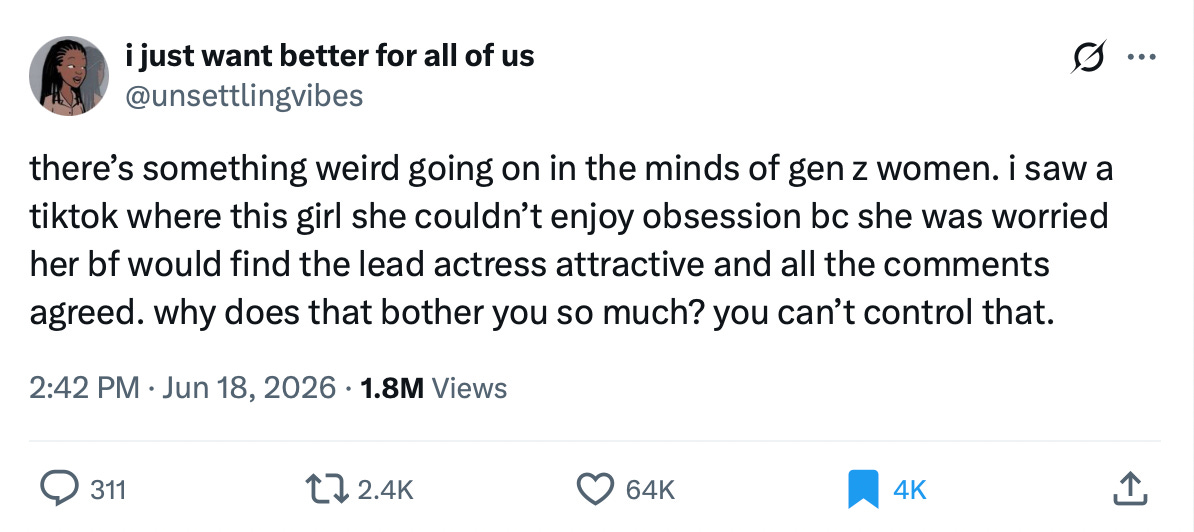
I usually tend to think that this kind of panic over young people’s sex lives is a bit overblown, but I came across a post recently that genuinely did make me feel like the situation might be getting out of hand. The gist of the thing was basically that no possible happiness awaits women in romantic relationships — it conjured a picture of partnership in which a woman’s every waking second is sure to be haunted by a rude, cruel man who couldn’t possibly love or respect her, who might beat her, whose awful presence will make the home around her feel physically smaller. Women throw their lives and futures away for the dim promise of love, the post argued, and if a man and woman actually do manage to be happy together it’s no good, either: they’re just going to spend their lives fearing each other’s deaths. Women are better off staying single forever, the writer insisted. A woman on her wedding day might as well be shipped off to die.
Seeing this new type of rhetoric online, I can see why the critics are alarmed: maybe something has shifted. Thanks to the phones and perhaps also due to Woke, all this gender stuff has crossed the rubicon from common-sense feminism (the vote, credit cards, etcetera) into a new breed of hypermodern radicalism, one that conspires to keep the modern woman isolated and alone. It’s easy to look at a post like this one and think, God, can’t we just go back to the good old days?
Wait, wait, my bad. All that stuff I read wasn’t from a ‘post’, per se! It was from Hali Meithhad, a polemical Medieval anti-marriage treatise published out of England in the thirteenth century. My mistake, my mistake.
I’m being glib, of course (sorry). Hali Meithhad (“Holy Maidenhood”) did not take the same angle as modern-day feminist heteropessimists — it was a piece of church propaganda written to encourage women to enter religious life. But good propaganda is typically built around real problems and uses the language of real fears, and so I doubt the ideas and experiences reflected in Meithhad were plucked from thin air. It’s a fascinating document, worth the read if you have an afternoon to spare — it somehow contains within it the spirit of essentially every tweet I’ve ever seen about straight relationships, from Female Dating Strategy “hypergamy” rhetoric (“almost all gentle women in the world now [do] not have the wherewithal to buy themselves a bridegroom of the same rank as themselves… [they] give themselves to slavery for a more worthless man with everything that they have”) to radfem-style polemics (“she becomes a slave under a man and his thrall, to do everything and to endure what pleases him, however badly it sits with her… [she] puts herself into drudgery, to manage household and servants, so many miseries, to see to so many things, to endure adversities and annoyances and sometimes shames, to suffer so many woes for so poor a wage as the world ever pays in the end; is not this maiden truly cast down?”) to asexual Tumblr posts (“Little does the maiden know of all this same misery: of the wife’s woe with her husband, nor of their deed — so disgusting! — that they do together”) to, of course, Christian purity stuff (“I will keep myself whole through the grace of God, as nature made me, so that the bliss of Paradise may receive me fully, just like its first shepherds were before they sinned”). I found it strangely therapeutic, despite its tragic gender pessimism. It’s nice to remember, sometimes, that there’s nothing new under the sun.
As I’ve seen the posts and essays suggesting from various political viewpoints that feminism/social media/“girlboss culture”/“therapy culture”/“the gender war”/the TikTok hive-mind/etcetera have artificially inseminated women with brand-new hesitations about heterosexual love and marriage, I thought of Meithhad often. It’s interesting, to me, that an issue so often framed as a recent development and attributed to very modern conditions (phones, social media, post-MeToo culture) can be mirrored so directly in a text written so long ago, borne from a society not only pre-technology but pre-capitalism.
This was on my mind while reading the discourse-bomb of the month: Magdalene Taylor’s New York Times essay There’s Nothing Wrong With Wanting Men, in which Taylor argues that women should foster a more positive outlook on modern heterosexuality (she cites the facts that the gender pay gap is equalizing and men are reportedly becoming more willing to share household labour). Like much other content on the topic and indeed like a great deal of culture writing in general, the piece repeatedly suggests through its language a sense of urgency, a feeling of recent decline. “[I]n the past year or so, heteropessimism has become a different beast,” she writes. The opening line declares that “gender relations are tense to the point of hostility these days.” When I read it, I thought: well, when have they not been?
This urgent language is common in Taylor’s work, which I’m analyzing here because she’s one of the most popular mainstream critics on the hetero-crisis beat and, I believe, often gives voice to a much broader cultural feeling. (Taylor has written multiple essays for the Times on the subject, is a senior editor at Playboy, and writes a Substack with 19,000 subscribers.) In a widely-read essay called Do women even like men anymore? Taylor writes that we’re living through a “decline of straight men liking women” — that “an increasing niche of straight men no longer seem to like women enough to even desire them sexually.” But the blame for this sexual crisis, she writes, is shared by both sides of the ‘gender war’: “women no longer liking men actually strikes me as a far more mainstream occurrence,” she asserts. “[T]he question of whether women even like men anymore, is barely worth asking. The answer is obvious: of course not.”
None of this is obvious to me, to be honest, but more on that later. Taylor’s work interests me because — unlike many of the loudest voices arguing that women are too negative about men — she is not a conservative scold handwringing about frigid Stacys or the (white) American birth rate: her fundamental conviction, one I broadly agree with, is that sexual desire is beautiful, important, and worth advocating for as a social good, and that straight women (whose desire has long been culturally suppressed and misunderstood) deserve to experience it without limit. She occasionally disclaims throughout her work that of course misogyny is real, of course sexual culture has always been complex, of course some men have always disliked women, and that some women of course have reason to be wary of men. The trouble is that these thoughtful caveats clash against the core language that often lays the arguments’ groundwork: language that implicitly gestures, with words like “decline” and “anymore” and “no longer”, to a hazily peaceful past that never actually existed.
A new and recent decline should logically have a new and recent cause, which may be part of why so much of the page space in Taylor’s work (and in the widespread discourse) addresses one culprit in particular for the troubles with heterosexuality: women’s public pessimism about men, and the online ‘gender war’ ideology believed to be enabling it. Heteropessimist rhetoric, Taylor writes in her Substack essay, is “a contributing factor in the decline of straight men liking women that I previously discussed. With so many of us explicit in our disdain for men, why would they even bother?” While Taylor writes that some of this newfound negativity could stem from legitimate cause, “[women] also… do not like men because we have promoted a culture in which this is normalized. It’s become deeply uncool2 as women to acknowledge any sort of affinity or appreciation for men,” she writes. “It’s as though we’re not allowed to like each other anymore.”
As a solution, Taylor primarily suggests that women try an attitude shift. “I propose something new,” she writes in the Times: “hetero-optimism, in which one does not shy away from the ills (real and imagined) of heterosexuality but considers our own potential for navigating them, still believing that some hope for our romantic future exists.” Listen: I like this idea! I’m very invested in the idea that you can date men and have a good life. (I like to date men, and I realized recently that I think I want to have a good life.) But as I’ve explored the broader discourse, I’ve become particularly interested in this language of urgency, the thens and nows, these dayses and now more than evers — the perpetual present-tense so common in culture writing. I’m interested in how this language collides with history, with feminism, and with the project of optimism, and how it invites us to feel about our place within each.
“Gender war” content is far from the only source of this perpetual present-tense, or what I sometimes refer to as the urgent-tense. Open Twitter or read a handful of buzzy culture pieces on Substack (or any number of more official publications), and you’re likely to find about a million claims that things are “increasingly” happening, behaviors are “becoming normalized,” a vague topic or idea is “relevant now more than ever,” that “we” as a culture are different now than how we “used” to be. Of course, certain things really are markedly increasing in recent years (frozen yogurt consumption! global average temperatures!) and ideological trends really do shift observably with time (e.g. second vs. third wave feminism or the rise of the manosphere), but the hallmark of the urgent-tense is that its claims, even if technically defensible, are rarely precise or substantiated with data. Rather than being positioned as claims at all, they’re frequently written like intuitive stylistic flourishes — as if it would be ridiculous for the author or the audience to give them much critical thought. B.D. McClay sums this up best:
The real trouble with “increasingly” is that it doesn’t mean anything. It injects a sense of urgency and even (thanks to the faux history) expertise, but does not actually provide either reasons for an occasion to be urgent or knowledge. If you single it out in any given paragraph and ask “what is this doing here? can the writer justify this claim?” the answers are usually nothing and no. Every word that doesn’t mean something is taking up the spot of a word that could. Every refusal to be precise and think about the implications of one’s language means arguments that are worse. To say that something is increasingly happening is to make an empirical claim. You should know what you are claiming and be able to back it up in a way that is not (essentially) “well, in 2010, no one cared about labubus.”
B.D. mainly criticizes this rhetorical tic for being annoying, which is correct (and unfortunately, once you start noticing it you literally see it everywhere). But I think it also, in certain contexts, can have far more serious consequences: it can make it harder to see the past clearly, and thus make it harder to understand the present.
To be clear, I don’t think the use of this language is always consciously manipulative or insidious (in fact, I think it usually isn’t, including in Taylor’s case). In some sense, it may be a natural result of the conditions of modern life. In Postmodernism and Consumer Society, Fredric Jameson wrote that a defining feature of our postmodern consumer-capitalist world is “the fragmentation of time into a series of perpetual presents”: the culture of late capitalism, Jameson writes, is themed by “the disappearance of a sense of history, the way in which our entire contemporary social system has little by little begun to lose its capacity to retain its own past, has begun to live in a perpetual present and in perpetual change.”
The urgent-tense has also, I think, long been encouraged by the media ecosystem. I spent many years pitching stories to digital publications, and know firsthand that many pitch guidelines prefer for your pitch to be “timely,” to have a “news hook,” or to be otherwise grounded in the present — i.e. for there to be a reason why readers should click on it now. You could write a sentence like “people tend to express their identities through the items they consume,” or “heterosexual relationships are fraught,” and it would certainly be true, but it feels a little vague and incomplete, doesn’t it? Much more exciting to say something like “now more than ever, people tend to express themselves through the items they consume,” or “it is becoming increasingly normalized for heterosexual relationships to be fraught.” It may or may not be technically true, but it feels pretty true, and more importantly it feels urgent, imbuing both the work and the reader with a sense of purpose. If this bad thing is happening now more than ever, it means that there must be something unprecedented about being alive right now. That feels good to read and good to write, and I think it’s essentially just part of a subconscious ‘cultural criticism’ style guide even when it’s not explicitly required. But it also, at times, can carry a subtle or not-so-subtle implication: if a bad thing is happening now more than ever, maybe it means something new has entered our culture to change it for the worse. (Some of the things that are relatively new in our culture include, of course, popular feminism, Black Lives Matter, trans rights, “wokeness”, cell phones, birth control, and no-fault divorce, which is part of why this rhetorical tactic is beloved by the right wing — it’s easy to let your audience fill in the blanks about which new things in particular might have had a hand in steering us wrong.)
One of the great purveyors of this tactic is Freya India, a right-wing Gen-Z pundit who writes a popular Substack called GIRLS. India’s goal (by her own admission) is to create an accessible right-wing pipeline for young women by addressing familiar, unobjectionable topics — consumerism, the commodification of women’s bodies, phone addiction, social atomization, and the ways that our lives and feelings are flattened through constant documentation on profit-oriented platforms — with conservative solutions instead of feminist or liberal ones. Her missives on these topics frequently go viral on Substack; if you’re not careful, it’s easy to miss that they often end with subtle calls to reinstate the nuclear family, find religious faith, and reject gender confusion. (For more on Freya, the Diabolical Lies episode about her is point blank one of the best podcast episodes ever.)
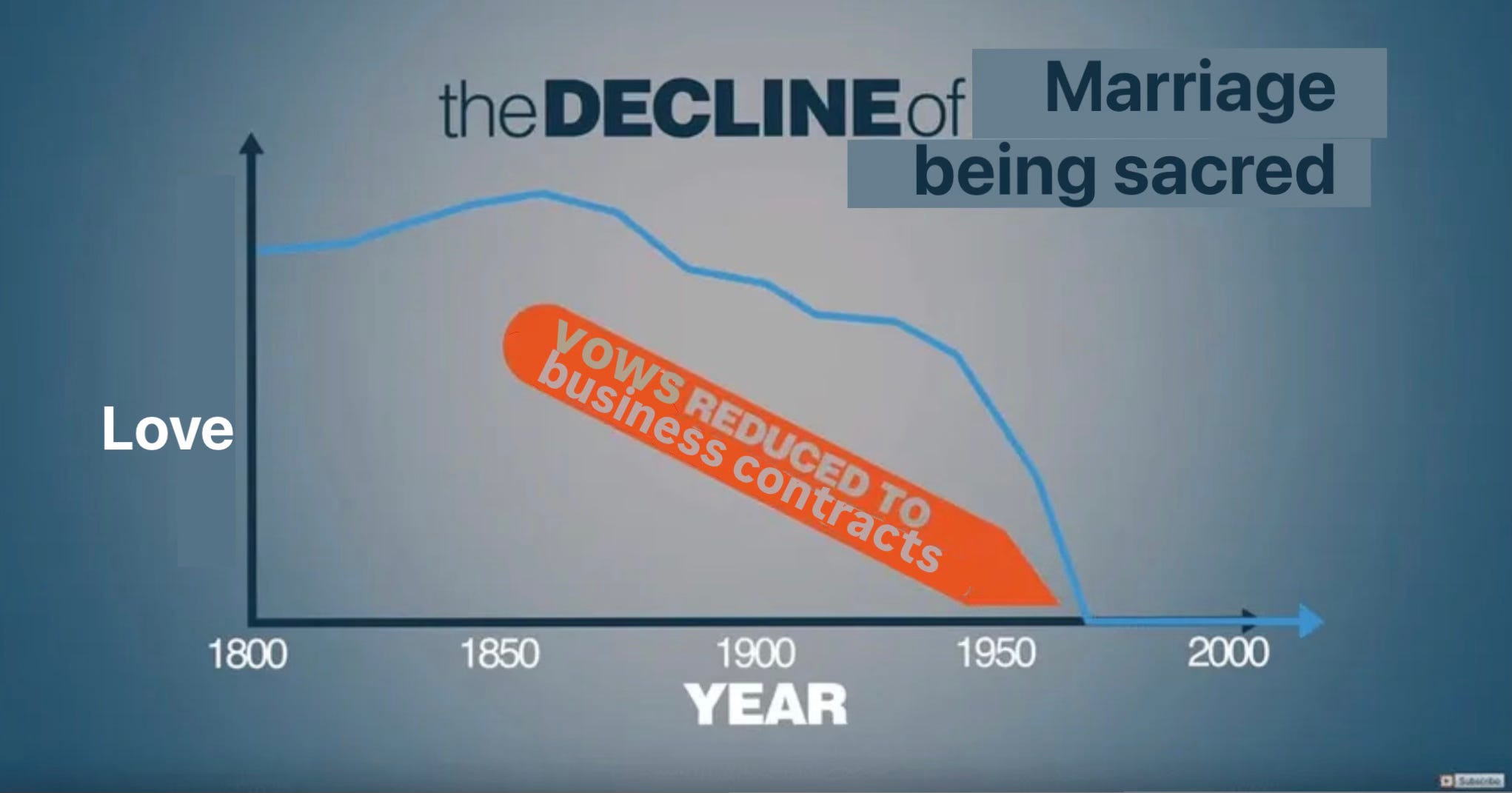
India’s first book, called GIRLS® and published earlier this year, is littered with the ahistorical urgent-tense. The book is predominantly dedicated to what India calls “the commodification of everything” — a worthy cause, to be sure, except for the fact that Freya argues it began to affect young women approximately fifteen years ago with the advent of phones and social justice ideology. “We are a generation being remade, from people into products,” she writes, a radical change she attributes exclusively to the “past decade.” As Diabolical Lies points out, her book uses the word “capitalism” precisely once, as an example of a social justice term pushed on girls in the mid-2010s (it uses “patriarchy” thrice, in a similarly mocking context). “Increasingly our identities weren’t based on what we did or valued, but what we owned. Who we were becoming mattered less than what we bought,” India writes. This is an attempt, to be fair, at a perfectly good idea: it’s so good that Debord wrote it almost verbatim around sixty years ago.3 At one point in GIRLS®, India says that marriage vows “came to feel more like business contracts,” ever since — if you can believe it — the legalization of no-fault divorce.
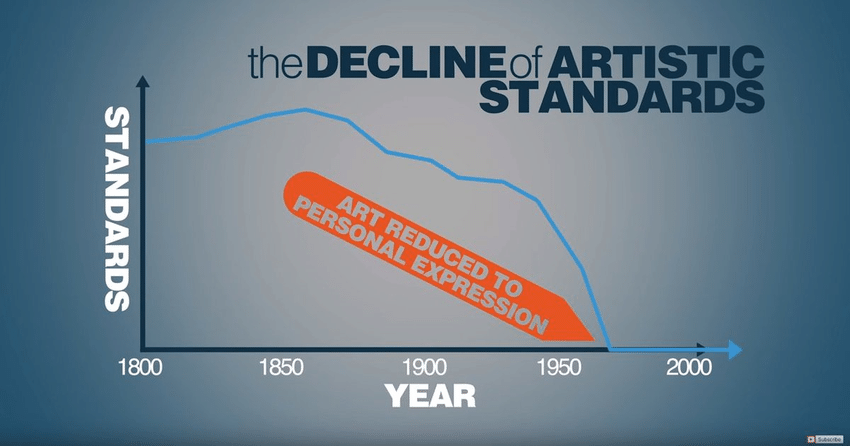
There’s a pattern here: address an undeniably real problem, sever it from historical context with the urgent-tense, re-assign its origin somewhere in the last 20 years, and then gesture towards recent issues when assigning blame for its cause. The concerning thing about India’s one-woman pipeline — and the only reason why I’m dignifying it with a response here — is that it seems to be working, at least in terms of spread. While scrolling through her posts, I notice that many have been liked by left-wing friends and peers; her book, which opens by literally saying “we need to go back” and closes by advocating for a mass cultural return to Christian faith, is blurbed as the “definitive analysis of a generation of young women” by ur-liberal Derek Thompson (??).
This points to an important dynamic: many people on both the right and the left are very concerned about social media, very concerned about heterosexual tensions, very concerned about social isolation and declining community and “therapy culture.” What can separate a right-wing critique of any of these quantities from a left-wing critique (and a good one from a bad one) is the relatively tricky question of how and where one finds the roots of these problems, and then what solutions are prescribed. If social atomization was essentially created by iPhones, we have no reason to look critically at capitalism or the nuclear family. If the process of commodification sprung out of nowhere somewhere around 2014, no need to crack open a Marxist-feminist text. If straight relationships have recently become fraught as a result of women’s TikTok posts, we need not pay attention to the centuries-long project of patriarchy, the horrific violence of rape, or the historic positioning of the heterosexual dyad as a replacement for a robust social safety net.
Even at its most innocent, the widespread usage of the urgent-tense muddies these waters, proliferating a norm of cultural criticism that lives only in the present — fundamentally disconnected, as a result of its very style, from historical context or systemic analysis, and thus disconnected from a coherent politic (and coherent solutions).
In early 2025, I criticized the urgent-tense in tech writing:
I see a tendency to write and think as though we live in an era somehow beyond or outside of history, as though all the problems we’re facing appeared with the advent of the iPhone, all new, distinct, impossible to contextualize. They’re often written as though phones themselves (or the internet, or AI, or algorithms, or the people that build them) spawned out of nowhere around 2008, a Pandora’s box sent down from the ether by a spiteful God, and immediately instituted a top-down brainwash of a previously free people. …I think we all would do well to get off of TikTok, but the purpose of a system is what it does, and so it’s also worth mentioning that phones are not an aberrant tumor that can be neatly excised while leaving the rest of the system intact… If the Atlantic columnists were to snap their fingers and get rid of all this technology tomorrow, we’d still be a consumer population that values the cutting of costs, the maximization of profit, the alienation of human labour from value, the commodification of all being into pure product, the supremacy of the market. With those principles as our guide, we’d find our way back to iPhones and AI eventually.
I wrote this with the knowledge that my own early writing (both public and private) is riddled with the urgent-tense. There was, again, no insidious reason why: whether it be because of postmodernism or simply because I was 20, I pretty much just earnestly believed that a lot of the things I was experiencing had never happened before. I wrote things that felt true without thinking to double-check if they actually were.
It’s not a crime to write imprecisely. But if feminism has any sole intellectual mission, it’s the difficult project of interrogating what we blindly feel to be true — questioning the stories we believe about who we are and figuring out where and why those stories may not hold. The feminist’s greatest enemy is not men, but vast cultural narratives about gender itself: stories about how things have always been, what men and women are naturally inclined to want, what our bodies and minds were built to do. Thus, good writing about gender must find it especially important to resist the beliefs that feel most automatic, most natural. It must be interested in history.
In an essay titled Do men even like women anymore? (expanded this year into an article for Playboy) Taylor makes a case for the early-aughts pickup artist as purveyors of “the lost art of actually trying.” “Guys like Neil Strauss and Mystery were not perfect, by any means — I’m not even saying they weren’t misogynistic — but they did like women,” writes Taylor. “They liked women enough to seek to understand them, even if only to get to sleep with them.” In contrast, Taylor believes that the men of today hardly even seem horny for women at all anymore — which is indicative, she writes, of a new level of cultural decline. The fall of pickup artistry, she argues, is a sign of yet another very serious and very recent shift: “basic lust, once a defining drive of life, is no longer a given.”
It should come as no surprise that I disagree with this analysis, not least of all because of my knowledge of the “Pickup Artist Rape Ring” — a horrifying sub-community within pick-up artist (P.U.A.) forums who ritualistically targeted and raped women and then blogged about each assault in detail for the enjoyment of their male peers. This is the problem with universalizing “basic lust” as an innate, natural, inherently pro-social feeling, and with implying that it’s only become fraught in the past fifteen or so years: first, it implies that there’s such a thing as a sexual desire untouched by socio-political conditions; second, it implies that men who fuck women because they hate women and men who reject women because they hate women are anything other than two sides of the same coin. In reality, neither of those men are ever having real sex with another human being. From their perspective, they’re both masturbating into an inanimate object.
But here’s what I find most interesting, and most relevant to my point. The community of pick-up artists that Taylor now defends was actually criticized in their time for precisely the quality she now attributes to the men of the present: they were accused of being far more interested in masculine performance than they were in women. This observation came most notably from none other than Neil Strauss, one of the most famous pick-up artists of all time, in his mega-blockbuster book The Game. “[Strauss] does come to perceive one curious thing about the P.U.A.’s,” reads a 2005 New York Times review of The Game. “They seem far more interested in spending time with fellow P.U.A.’s, amassing, refining and discussing the game, than actually getting to know women.” In The Game, one P.U.A. describes being unable to remember what it was like to kiss one of his pickups because he was so preoccupied, mid-kiss, by the idea of passing her along to his friend.
I’m not opposed to the idea that misogyny is becoming more extreme and more bizarre on the internet, but I do want to be wary of finding aberrations where we might instead find trends. Taylor writes at the end of her piece that she is “not entirely pessimistic” about gender relations because she “believe[s] there is some undercurrent of old school pickup artistry on the rise.” I wonder, simply, if we might be able to find a more meaningful optimism than that.
Maybe it sounds like I’m being too picky. I realize now that the Times essay bothered me for reasons beyond the intellectual: when it was released, I was in the midst of helping one of my dearest friends through the aftermath of a devastating romantic experience. My friend is a kind, generous, talented, beautiful woman who has been trying for years (with unfathomable effort and remarkable optimism) to find healthy, fulfilling sexual relationships, and her optimism was recently rewarded with a man who seemed to have set out at random to manipulate her, take advantage of her, and leave her destroyed. Watching her cry in the aftermath of this torture — hearing her say through tears that she was scared the trauma from how he’d treated her would change her psyche for the worse, that it would now be even harder than before to find healthy, “normal” relationships — made me feel like my heart was being ripped out of my chest. I read Taylor’s essay while struggling desperately with my own questions about optimism, trying to figure out how to give my friend hope for her future without erasing the harsh reality of her experience, and found little to guide me. What could I do for her pain? Tell her that American men are now statistically more likely to do the dishes and suggest she cheer up?
Here I find the most salient argument against writing from the perpetual present in this context: it simply does not work well at the task of producing optimism. I don’t think the majority of women engaging in online heteropessimism actually hate men, at least not to the point of separatism: I think they are struggling — often ineffectively, yes, and often with ill-formed tools, but still struggling — to reconcile their love of and desire for men with the awful harm that has been done to them, and the well-founded fear of more harm to come. Taylor is right to echo Asa Seresin’s critique that the strategy of performative disaffiliation from men, particularly through joking viral-bait TikToks, is not an effective strategy to produce better conditions. But the way to generate real, meaningful optimism, what one might call revolutionary optimism, is not to wrench these women from history, leaving them with no way to understand their conditions and no roadmap but a vague instruction to think positive.
Perhaps the most important oversight in the Times piece is the fact that that Taylor’s “new” suggestion — a “hetero-optimism” that addresses the ills of heterosexuality while retaining hope for a better future — is in fact not new at all: it’s a feminist project with an intellectual and political history spanning centuries, a project to which countless women (and people of all genders, for that matter) have dedicated their lives. Think of bell hooks, writing in 2004’s The Will to Change about wondering “what it meant to love men in patriarchal culture… how we could express that love without fear of exploitation and oppression.” The great Ellen Willis, arguing for a “Feminist Sexual Revolution” in 1982. Or Victoria Woodhull, who started advocating for “free love” in the late 1800s after being married off to a 28-year-old doctor at 14.4 “When woman rises from sexual slavery to sexual freedom,” Woodhull wrote, “into the ownership and control of her sexual organs, and man is obliged to respect this freedom, then will this instinct become pure and holy; then will woman be raised from the iniquity and morbidness in which she now wallows for existence, and the intensity and glory of her creative functions be increased a hundred-fold.” This is optimism, for my money, real optimism — the type of optimism that can only be borne from a realist’s knowledge of how bad things really are. You have to know you’re in the cave to dream of getting out.
Some women have fought this battle in the public sphere, by participating in organized political action and public speech; some have fought in their private lives, trying very hard at great personal risk to pursue love despite violence, humiliation, and degradation. Countless — literally countless — women have been raped, murdered, beaten, forcibly impregnated, institutionalized, drugged, and exploited in the long history of the fight to free heterosexual love from violence and oppression. We’re too late to save most of those women. I should hope at the very least that we don’t forget them.
“We can embrace marriage, hoping to transcend its contradictions, or reject it, hoping to find something better; either way we are likely to be disappointed,” wrote Willis in 1979. This is not an optimistic sentence, per se: it might even be called pessimist. But when I first read it, I felt a weight remove itself from my shoulders. Here is the truth: I am terrified of the freedom of the present. I am terrified of the restriction of the past. I’m terrified of my own future, stretching out before me into a vast, blurry darkness — so terrified that I’ve spent most of my life trying hard not to think of it at all. I want to love someone forever, but I don’t think I want to get married, but I’m scared of ending up alone with nothing to protect me, and I’m scared of being so pessimistic that I miss out on a good life, and I’m scared of being so optimistic that I stop seeing the truth, and I’m scared of being so safe that I end up bored, and I’m scared of living so freely that I end up in danger. I’m so scared, honestly, so scared, and I’m so tired of thinking about it all the time, so tired of fighting to see romantic love clearly through the thicket of all these narratives. Reading Willis did not chart me a perfect path to the future — I don’t think anything can — but it gave me something that I think might be better: the realization that I didn’t have to shoulder the weight of my questions alone.
The fact that words from the past can feel so applicable to our reality doesn’t mean those writers were fortune-tellers, speaking “ahead of their time” as if by magic: it means that the problems faced by people decades and centuries before us were not always so different from our own, and that if we look closely, we might be able to place ourselves within a historical struggle. We can reminisce about a time before TikTok, iPhones, or MeToo as a way out of our current problems, but we are likely to be disappointed: it is those conditions, after all, that brought us to these ones.
This is one of the weirdest things about writing a book: I worked for a really long time to write down literally every single thought I have about a topic I care about, expressing it all in exactly the way I’ve always wanted to express it, and then I have to wait over a year for anyone else to be able to read it!! It’s especially strange when the topic re-emerges in the discourse and I just have my perfect take locked and loaded in the chamber and I wish I could just post the Google Doc link. But I can’t!!!
I’ll be honest: when women say “it’s not cool to like men anymore” it reminds me a bit of when people online say stuff like “can we PLEASE bring back mid-rise jeans so I can wear them again??” and it’s like, what are you talking about? Like, besides the fact that you don’t need anyone’s permission to do what you want — do you really think people aren’t wearing mid-rise jeans? Try going to a Walmart in any American suburb. You will see one million pairs of mid-rise jeans.
From Society of the Spectacle: “The first stage of the economy’s domination of social life brought about an evident degradation of being into having — human fulfillment was no longer equated with what one was, but with what one possessed.”
Want to note that I’m not fully endorsing any of these efforts per se, only noting that there has been a great deal of inquiry into the project of heterosexual sexual optimism!
"urgent tense" should win this month's *APT COINAGE AWARD.* srsly, i could not put my finger on why so much culture writing gives me low-level anxiety. it's a helpful phrase/frame.
great work 👍👏
This makes me so glad that I chose to major in classics back when I was an undergrad—what stuck with me from parsing through all those Greek and Latin texts was that people have been the same basically for literally thousands of years! The urgent tense (great coinage) is such an easy way to grab attention online, but the fundamental truth is that human nature has remained largely unchanged over the course of our history. I, for one, would be very bored were the battle of the sexes to cease for good.