

Poser ethics
on faking it. part one of a series of posts about books.

internet princess reader survey results are coming soon. as of right now, there are about 8,100 responses (crazy!). fill it out now if you haven’t already.
Over the next few weeks, I’ll be publishing a highly-requested series of posts about reading for paid subscribers. The first is this one! I had initially planned for it to be mostly about my path to developing an earnest love of reading, but it morphed to include a lot more: a bit of analysis about current literary landscape, a reparative reading of the discourse around “performative” book culture, a sort-of defense of performance in general, a reflection on my past as a poser, and a discussion of the paradigm I call POSER ETHICS. (I also go on the record about “literary it-girls” for the first and hopefully last time.) This post was originally like 6500 words long so I tried to split it up — so there may be a part 2 coming about how trying to engage seriously with books has materially expanded my life and solidified my sense of self, and the reasons why I think reading is, for lack of a better word, “good”.
Next, I’ll publish What I Read, which will list some of the best books, essays, and papers I’ve been reading recently, the writers and magazines I follow religiously, tips for tracking down pieces of paywalled, rare, or deep-cut reading material, the ways I like to find exciting new things to read day-to-day, etc. After that will be How I Read, a post about the actual habits I developed to start reading again and get the most out of what I read, as a person with a horrible attention span and a terrible work ethic. I’ve also been thinking about what I’d do if I were trying to start a career as a writer right now with zero connections or experience — this is another one of the most common questions I get from readers — so maybe I’ll write a bit about that as well.
I’m excited for this series! I really like to read and it’s sort of silly I haven’t written very much about it yet! It is basically the only thing that I reliably do every single day (even including, like, changing my clothes and washing my face). Plus it’s nice to be able to do more bloggy posts while I get into the weeds on writing my book.1 My big hard deadline is coming up so please continue to wish me luck.
I think part of why I was hesitant to write something like this is that I’m a bit of a latecomer to “serious” reading, or at least I often feel like I am when surrounded by the many pedigreed geniuses of the New York literary scene… I am always meeting people who somehow seem to have been intellectuals from birth, who were blowing through Kant and Rudolf Steiner in high school like Sontag did — proud owners of God-given, constitutional literary curiosity, who followed that curiosity to a series of hallowed intellectual institutions where they met more innately serious and curious people and so on and so forth, their lives one great erudite parade. I’m exaggerating, of course, due to my own inferiority complex. And to be fair, maybe nobody feels like a true intellectual. But, regardless: this story I made up about people who I imagine to be better than me is not My Story. (If I remember correctly, my main interests in high school were Instagram, mediocre folk-punk music, Charlie Kaufman movies, and going to Sephora.)
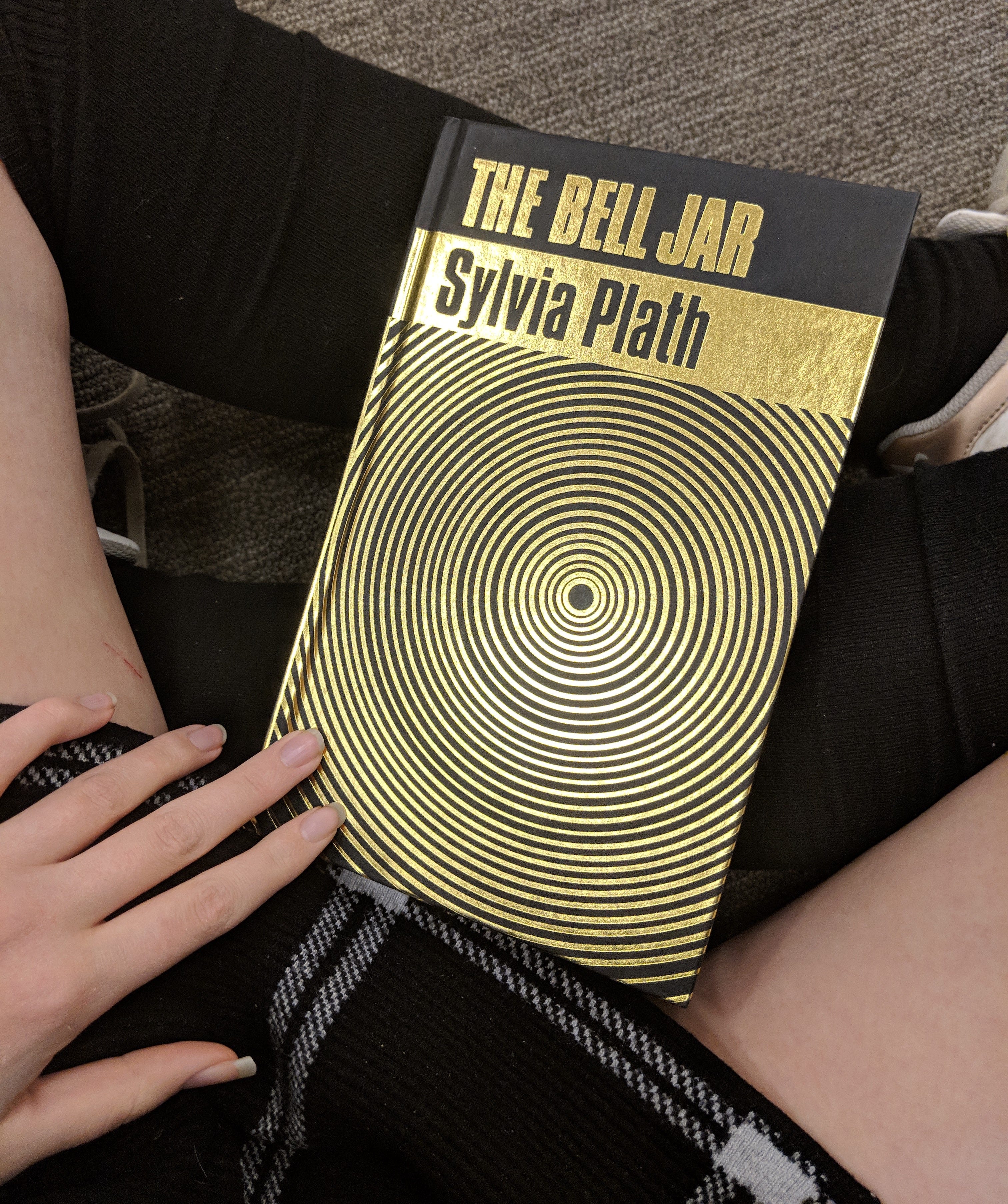
I always liked books fine — I was fond of Vonnegut and The Bell Jar as a teenager — but I generally skimmed the readings in high school English and ignored them altogether when I took English 101 (the sole humanities course I completed in my short-lived college career). I didn’t have a developed sense of literary or intellectual curiosity, which meant that books generally felt like a means to an unfulfilling end: usually either a good-enough grade or the idea of being perceived as smart and tasteful by someone I wanted to impress. I’m also extremely poorly-suited to studying and do not enjoy it at all, and so often felt out of place on most of the studyblr- or academia-adjacent book communities I stumbled across as a teenager. I only started reading seriously after I left school, when I started to realize that I wanted to build an intellectual life for myself on my own terms. (Perhaps uncommonly, I’d say I was a working writer before I was a truly passionate reader — maybe will get into this more in a future post.)
Why read?
I hope this doesn’t come off as judgmental, because I say it without judgement: for many people, one of the primary reasons to start reading is in the hopes of being seen as the type of person who reads. (As said in the intro, this was certainly a large part of why I started reading, and — I’LL ADMIT IT IF NO ONE ELSE WILL — is still to some extent an ongoing incentive.) I won’t bore you with a re-hash of the last year of discourse, but suffice it to say that stocks are up on the aesthetics of bookishness. Being well-read is now the type of lifestyle signifier that appears on Kaia Gerber’s t-shirts. CouCou intimates (which, unrelatedly, has a great cotton slip dress and a bra that in my experience is just okay) has started carrying a pair of underwear embroidered with the word “reader”.


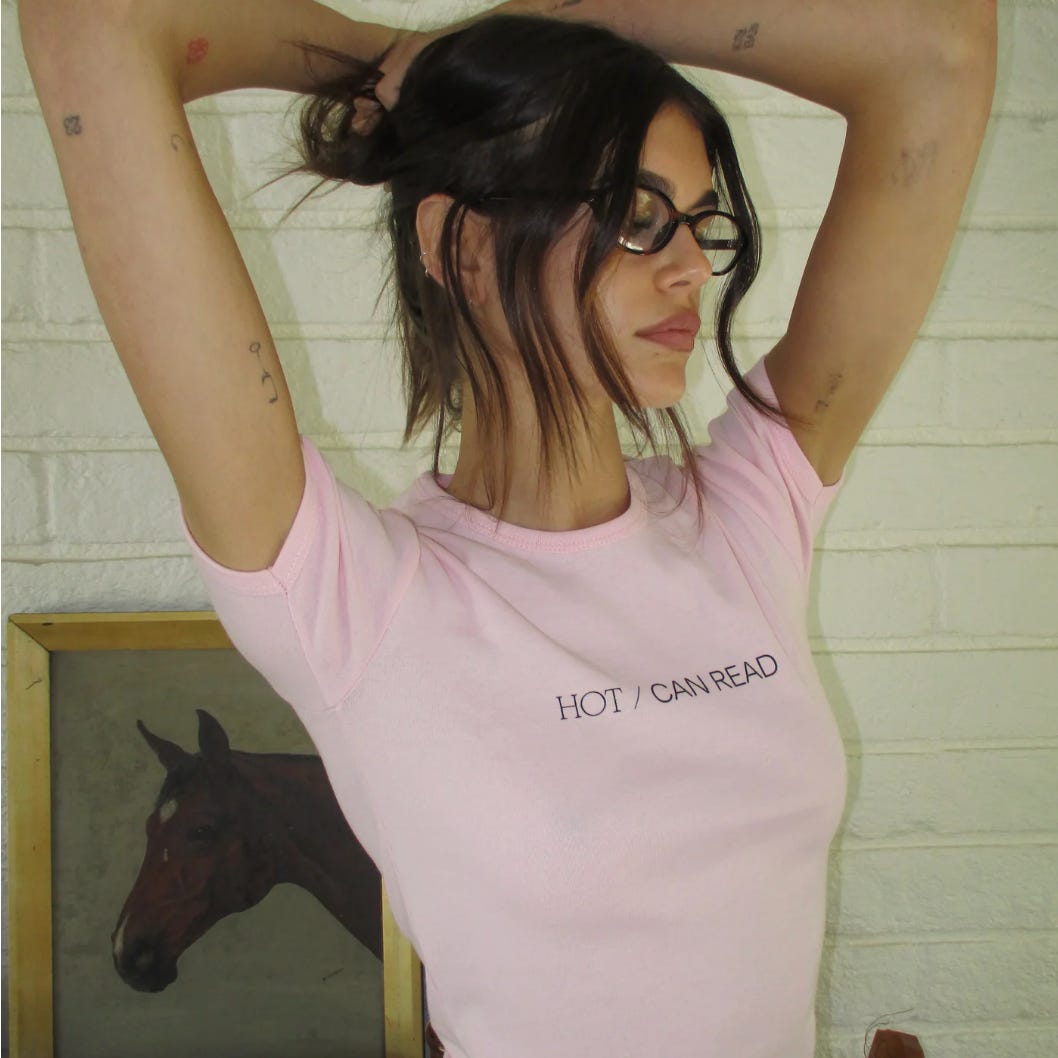

I’ve done so much criticism of digitally-performed aesthetic identity over the years that I’m frankly pretty bored of it, and I don’t necessarily want to do much more of it here (although I do want to encourage us all to be wary of wanting Nietzsche like you want a hamburger, to paraphrase Mark Fisher — more on this later). It feels like nearly any criticism one could make about young women taking photos of themselves reading has already been made a million times over; I feel like we all know that social media incentivizes us to craft consumable personas, to prioritize surface-level aesthetic experiences over privately-held and deeply-felt emotional ones, to run on envy and memetic desire and competitive self-optimization, to buy things in order to better sell ourselves. We know, too, these are pressures that fall especially heavily on women. Most of what I could say critically on this topic I’ve essentially already said here and here, and the idea of rehashing it all again feels easy and cheap, so I won’t. I've also wondered if the endless cycles of discourse on this topic, including my own early additions to the genre, may at times be the result of an unchecked or sublimated fixation on the things we intend to criticize — if it’s possible that one can write critically about aesthetic optimization as a way of continuing to worship it while establishing plausible distance. Much to think about, etc, etc.
Here’s one thing about wanting to be seen as a person who reads: it admittedly just feels really good, in the same way it feels good to be recognized as a person that works hard or a person that gives good gifts. While reading is technically neutral — a book can be literally anything, and many of them are both very easy to consume and almost totally void of artistic value —being seen as a Reader still feels like an acknowledgment of effort, of conscious priorities, of perceived values. And I think it often is! Obviously, to be more specifically recognized as someone with sharp literary taste feels even better. (I suspect that it actually might just feel good to be acknowledged by another person as having essentially any trait at all. Even when I hear that someone has said something sort of bad about me, I sometimes still feel a little pleasure just at being confirmed to exist actively in the world in some way.)
It also might be possible to forget amidst some of this discourse that identity is not necessarily insincere or false just because it’s “performed”. Performed identity — i.e. identity that is demonstrated to others through actions we take in the world — serves a variety of real, concrete purposes in all our lives, one of them being social: if you’re seen as a person who reads, it can make it easier to meet other people who read, and getting to know other people who read is one of the best things about reading. The concept of identity-signaling online has gotten a bad rap (which, again, is often deserved), but it’s worth remembering while we make these criticisms that everyone has to present themselves to the world in some way or another: I know a lot of people who talk a lot of shit about “literary it-girls” and “thought daughters” (both labels that I think are almost pretty incoherent and therefore nearly impossible to discuss meaningfully2, but are used generally to describe young women skilled in performing a curated, feminine bookishness online), and nearly all of those critics are just as invested in curating and projecting their own intellectual online identities. They just happen to think that their performances are subtler, more tasteful, more real; their selfies less contrived, their book-posts more sincere, their taste more authentic, etc, etc. But by criticizing the form more than the content, these critics get locked into a type of sneaky double-artifice that the literary it-girl generally does not: they have to invest not only in performing an image-self, but in performing that they are not performing it. Tough break!
I guess part of what people get up in arms about is the idea that some people are performing the identity of “reader” without actually doing enough reading, or reading the right books, or engaging seriously enough with the books they do read. Which, sure, I guess, whatever. I agree that it’s unpleasant, if completely predictable, that the identity of “reader” seems to be valued completely separately from the content of any specific book or the work of any specific writer. But I just also think that the difference between an “authentically” performed identity and an “inauthentically” performed identity is blurry at the best of times, and being a bit of a poser is usually the first step to becoming the real deal. Plus, I’d frankly much rather young women curate their performed identities through overpriced literary merch than through a baby tee that says DUMB SLUT or STAY AT HOME GIRLFRIEND or whatever H&M is selling now. Another way of putting it: if we are who we pretend to be, is it really so wrong to pretend to be someone who cares about books?
Is it sort of silly to project an expensive aesthetic image-self around the idea of being someone who has a “latest favourite” Woolf novel? Yes, obviously — I don’t want to engage with books that way, and the people I like to talk to about books don’t tend to engage with books that way, either. It’s easy to poke fun at the fact that the authors name-dropped in the press copy for the READER panties (Woolf, Didion, and Babitz) are all pretty boilerplate picks, beloved by corporations and celebrities for their accessibility, their vaguely aspirational feminine identities, and their relative apoliticism.3 (They’re also all white, as are most of the other t-shirtable authoresses du jour, which surely contributes to their perceived sense of brand-friendly “universality”.) Some might feel the need to profess that the people who engage most passionately with challenging literary culture rarely seem to be the ones who buy the READER panties, which may be true (although there is of course no way to prove it, and no compelling reason to try). But it concerns me sometimes that in all the writing about how silly the girls who post about Woolf, Didion, or Babitz are, it seems like there is precious little engagement with the fact that Woolf, Didion, and Babitz are incomprehensibly talented writers, that they wrote serious, thunderous books that crack you wide open when you read them at 18 or 22 or 35 or 50, that it can feel markedly different to live in your body and in the world after you’ve read them, and that the girls who are reading and loving these books for the first time may be struggling themselves to find the right way to externalize these vast, chrysalid feelings growing inside and around them. This is to say that a lot of the criticism of “reader” culture is guilty of the same sin it aims to admonish: the critics, too, can start to care more about the performance than about the books themselves.
The first time I read Approaching Eye Level, which is a book that has irreversibly changed my life in a new, distinct way each of the times I’ve read it, I wanted to buy a t-shirt that said VIVIAN GORNICK and wear it everywhere I went, never taking it off. I wanted to sleep in this imaginary t-shirt, have sex in it, wear it on the train, and at work, at parties. This was not at all about being wanting to be recognized in public as tasteful or smart by someone else who liked Gornick. I recognize now that it was fundamentally a fantasy of self-expression, a wish to be able to describe to the world a feeling so big as to be indescribable: I wanted everyone who saw me to understand that I was a person who had read Vivian Gornick because I suddenly did not know how I had ever understood myself without reading Vivian Gornick, and the person I was before I’d met the essays in Eye Level was suddenly unrecognizable to me, as walled-off and inaccessible as a stranger. I wanted her name to be part of what it meant to meet me. I couldn’t imagine knowing me without knowing her.
Not all books make you feel like this, which makes it scarier and more overwhelming when they do (it’s sort of a Russian-roulette style hobby where like one in every ~10 books you read to kill time before bed might end up dragging you nearly-unwilling into a new self, a new world, regardless of whether or not you’re ready for it). I never get used to it; reading one of those special books sometimes makes me physically sick, or plunges me into days or weeks that feel like I’m stuck somewhere outside of my life, begging and pleading to be let back in to the normal rhythm of things. I’m trying to talk about this oceanic feeling to express empathy and understanding for the girls who buy Joan Didion underwear or post pictures of book passages underlined in lip-liner, who are struggling to make legible an extremely complex matrix of feelings, desires, and demands. But, conversely, I’m also trying to talk about this feeling to express why reading is worth engaging in seriously, privately, obsessively, for its own sake — because this feeling is what we risk losing when it’s reduced to a means to an end. Look at that… my criticism and my love are coming from the same place… groundbreaking…
Like I wrote at the start, I think I care about this stuff because I spent a relative majority of my life as a teenager lost in a world of confused performance, alienated from my own passions and desires, unable to access a private intellectual world. I certainly posted photos on Instagram of books I hadn’t read, and probably even took webcam pics of myself pretending to read them. I can remember looking up Wikipedia summaries of “smart” books so I could reference them in conversation. I find this sad and almost unbearably embarrassing to think about. And, AND: I have a great deal of love and empathy for my younger self. I think the way I engaged with books back then was borne of a real and desperate longing to be a part of something, to figure out who I was, to receive literally even a little bit of respect, to try and slot myself into a culture that at times seemed so actively hostile to me and to other young girls. Surely I was scared, too, that the way I dressed or acted had already precluded me from ever being taken seriously, or from living a serious life. My proud aesthetic engagement with hot girl book culture4 was an attempt to fight this assumption, to prove to some imagined enemy that I could be smart and worthy of respect while also caring about Instagram or whatever; but the self-defeating prioritization of aesthetics over genuine intellectual effort that I displayed in the process was, I think, a kind of tragic subconscious acquiescence to its terms.5
I like to refer to all of this — the paradigm in which insincere, surface-level aesthetics are more immediately “real”, or more comprehensible, than the idea of complex, deeply-felt, earnest engagement — as poser ethics.
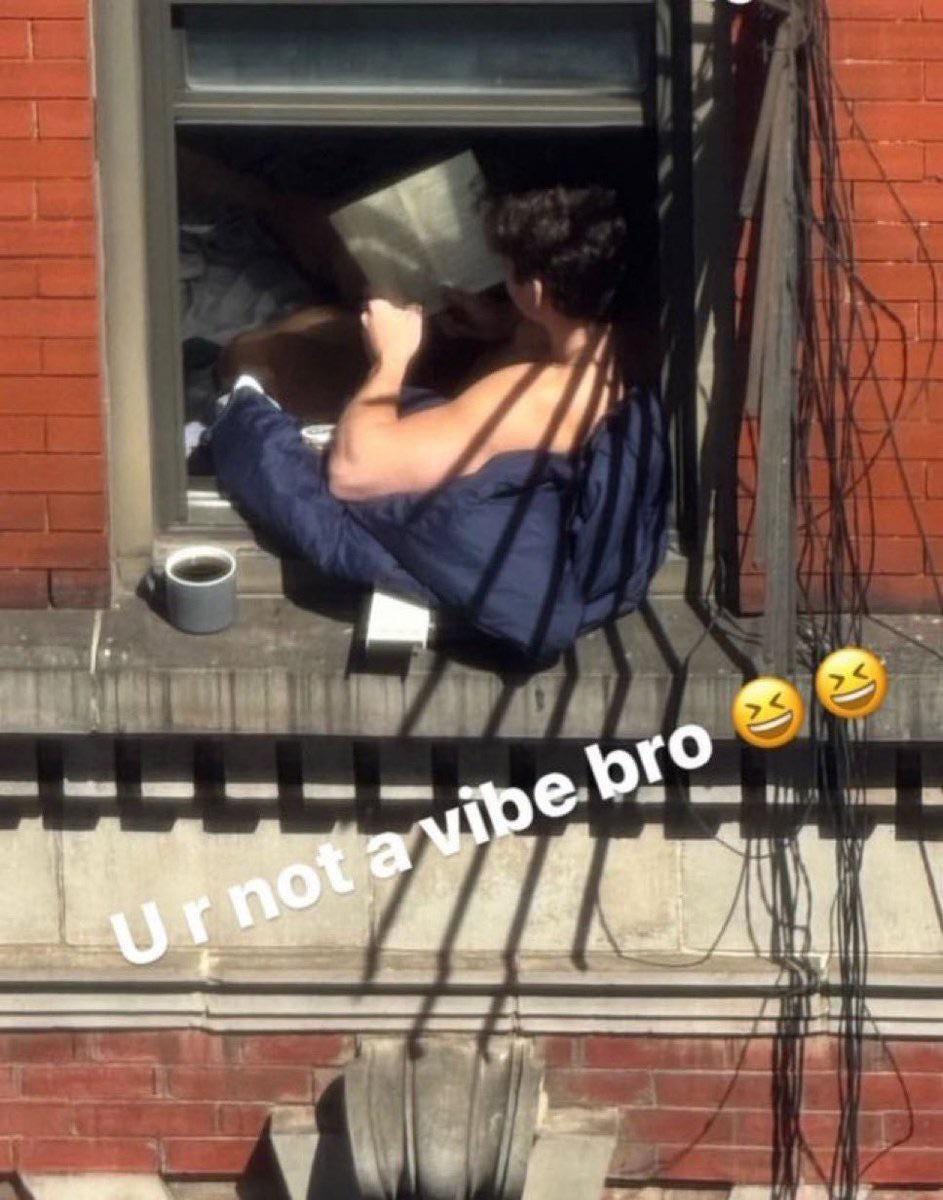
The guy in the “u r not a vibe bro” image may be subscribing to poser ethics, but the critic calling him a poser (or the person who uses this meme to accuse other people of being posers) is often also subscribing to poser ethics, by living in a world in which all action is perceived primarily as insincere, where it becomes inconceivable that someone could earnestly enjoy reading a book by their window with a cup of coffee. The critic lost in the world of poser ethics mistakenly believes that something being performative prevents it from being real, and loses access, in the process, to a great deal of reality.
To live life as a slave to poser ethics sucks. You might spend your days never feeling real enough, chasing art that doesn’t satisfy or excite you, mimicking or mocking other people’s opinions instead of getting to feel the joy of developing your own. You will be so preoccupied with whether or not you’re “faking it” that you start to care way more than you should about other people who seem to be “faking it.” You will do confusing things that don’t make sense, like spend all day tweeting your distaste for people who tweet too much, or writing personal essays about how annoying people who write personal essays are. It’s been funny to let myself write about this stuff, because I used to think about it a lot, and I only realized while sitting down to write this that haven’t been inclined to think about it in a while. Part of this may be because my life has been kind of slow-motion collapsing around me for the last eight or so months (lol) and I’ve been too frantic and crazy to think about most things, so don’t read it as a brag — but when I’m feeling particularly generous to myself, I wonder if it may also be because I’ve been busy reading.
Perhaps trying to write about the virtues of reading is a self-defeating goal, because one of my problems with online book culture is that it often attempts to simplify the process of reading into an easily comprehensible reward system. My neighbor recently reminded me of the part in Capitalist Realism where Mark Fisher talks about observing among his teenage students a phenomenon of “depressive anhedonia”, or hedonic lassitude: the compulsive, zombified inability to pursue anything other than immediate pleasure. “There is a sense that ‘something is missing’,” Fisher writes, “but no appreciation that this mysterious, missing enjoyment can only be accessed beyond the pleasure principle.” Notably, he defines this condition as a result of his students’ “ambiguous structural position,” trapped in a middle-space between being subjects of a disciplinary institution and being consumers. (Sound familiar?)
Fisher observes that even the high-achieving, intelligent students tend to “want Nietzsche in the same way that they want a hamburger”: as a consumable object that will provide for them precisely what they want, when they want it, on demand. “They fail to grasp — and the logic of the consumer system encourages this misapprehension — that the indigestibility, the difficulty is Nietzsche.” I guess I’m barking up the same tree I always do here, saying that difficult things are worth it and that the process of engaging with difficulty is rewarding in and of itself. But I can’t help it: I think it’s true. I think that there are vast stretches of time as a reader that have almost no comprehensible rewards, that are pretty boring and don’t even really give me anything to talk about at parties. I have spent a long time working to understand dense, difficult texts that didn’t end up giving me a helpful, productive, or even particularly interesting takeaway. But I can recognize that all of this time — the time spent being kind of a poser, and the time skimming the readings in school, and the time doing nothing after I dropped out, and the time spent engaging with things privately and seriously with no reward, and the many times that reading has felt rich and sparkling with meaning, transformation, change — all of it has been essential to the process of building an intellectual life on my own terms.
And the process of building an intellectual life on my own terms — a journey that is very much still in progress, and probably will be forever — has been maybe the single greatest joy of my whole life, and the most reliable source of meaning and purpose that I have. I sometimes literally burst into tears when I read certain essays or papers now just because it feels so special to have been able to gain access to this part of myself, a part that craves knowledge for its own sake and finds a sometimes-euphoric pleasure in the act of seeking it. It feels like my life has a smooth, firm bedrock, a sense of certainty that follows me everywhere. I sometimes feel, now, a kind of precious, sacred aloneness — a feeling that no one is watching me, that I exist inside myself, that I have access to fleeting moments of true sincerity. It disappears at times, this feeling, but I always sense it will come back. This type of life at one point felt so foreign to me. I am so grateful to have it now.
More on all this next week. happy spring. love <3 <3 rayne
EDITOR’S NOTE: I wrote this sincerely hoping this would be a quick bloggy post but I ended up writing 4400 words and spending like two weeks on it. This always happens to me! Sometimes I really worry that it cuts into my income because I release these huge high-effort posts less-frequently instead of shorter ones once a week or whatever. But, for better or for worse, I think longform is just where I live.
This is not a “literary it girl” discourse post. If it was, I would discuss: 1. the crumbling material conditions of the publishing industry that have made it impossible for anyone to control or guarantee literary success anymore and thus have left everybody in a scarcity-mindset panic over any factors that could possibly contribute to making a writer successful 2. The lack of clarity about what “literary it girl” actually means, what type of person it specifically refers to, how it usually seems to be used to represent like one person the critic in question doesn’t like and therefore has become this sort of spectral boogeyman with no clear referent 3. The ways that online persona can gain attention without guaranteeing sales, prestige, or respect 4. The fact that the original term was coined to refer to indie authors trying to generate excitement around their releases without institutional backing which seems to be context that is mostly lost. But this is not a literary it girl discourse post so I will not be discussing any of that.
none of these writers are actually apolitical, obviously — in fact, they are all extremely political in very different ways — but I think that brands (and some people) have found them easy to interpret as pleasantly inoffensive or politically unchallenging, or “neutral,” due to factors like prestige and whiteness.
there’s a part in King Kong Theory where Despentes takes this funky psychoanalytic approach to the Hot Smart Girl thing: if I remember correctly she basically says that women feel like they’re castrating their fathers by being smart and so feel the need to present themselves sexually to the world as a way of symbolically fucking their fathers, which in turn is a way of symbolically apologizing to them. to me, to be honest, this pretty much reads.
This is the trouble: because women are often both rewarded culturally (with attention, proximal power, sometimes financial gain) and mocked interpersonally (as stupid, vapid, desperate, inauthentic, etc) for stereotypically feminine performance online, it’s easy for that performance to feel like an act of rebellion without it actually attacking any of the forces that structurally limit us. I find it frustrating and counterproductive that some people feel the need to identify themselves or others as “hot girl writers” instead of just writers; I also understand why women who have faced near-violent lifelong pressure to make themselves beautiful under threat of being made disposable, and who were then told that wanting to be beautiful under this system meant they were vapid and frivolous and thus worthy of being discarded from a different angle, might find a personal feeling of victory in insisting on their capacity to be both hot and smart at once. I understand, too, that despite this rebellious feeling, if a woman happens to be smart then most of the parties that matter (the men in the boardrooms, the marketing department in charge of selling her book, the algorithms that disseminate her posts, and the many, many people who are just straightforwardly repulsed by the existence of unattractive women) would generally in fact prefer for her to be hot as well — and that women who don’t spend their time trying to be hot face a series of punishments and obstacles that get far less airtime than the hot girl’s plight. It’s hard to tell who’s winning here. I don’t think anyone is.
wow. goddamn. I definitely have gone though periods where i am absolutely consumed by the new movies, books, and music that I discover or finally choose to dig into (jamon jamon, SCUM manifesto, and Julieta Venegas being significant, respectively) and my reaction is to sort of shove them in the face of anyone who will listen, as a desperate like. sobbing screaming attempt to make someone else share with me the feelings they’re inciting. Like, DOES ANYONE ELSE KNOW ABOUT THIS??? (like if you were color blind and saw color or if u had never seen or touched snow before) even when it’s like. fiona apple or charlie kaufman or arundhati roy and yes everyone has known about it for potentially decades. that like. DESPERATE feeling, almost obsessive, almost panicky is why I love reading, because I am simultaneously tapping into a feeling that thousands of people have had before me: that discovering this author or this story or this essay or this new way of thinking is actually literally changing my life right now, and i want (NEED) everyone else to be able to access these feeling and revelations i’m having. so it’s totally prosocial and relevatory and i feel that it connects me on a spiritual level to humanity in a greater and deeper way. reading is PROFOUND and i actually have been thinking so much lately about how grateful i am to be literate! and like. educated. so much % of the world and MOST PEOPLE throughout history just can’t / couldn’t read!! like that’s so crazy. loved this is so much and i can’t wait for the other ones.
i love this!!! it's so incredibly resonant, thanks! i wanted to thank you for your candidness. you don't know this but in my own journey to find my own intellectual paradigm you've been super helpful. i follow your book recs and i'm really looking forward for the other parts of this series (as another person with a horrible attention span and a terrible work ethic). wonderful reflection that's lost on most people who try to find virtue, but madly relevant.